
Co-Extrusion
Co-extrusion is the process of simultaneously extruding two or more layers of different polymer materials through a single die to produce a unified, multi-layer film structure. The result is a film that combines the individual properties of each layer — barrier performance, heat sealability, mechanical strength, optical clarity or surface printability — into a single, integrated structure that no single polymer could deliver on its own.
At NytronPackaging, co-extrusion is one of our core production capabilities. It sits at the heart of how we engineer high-performance flexible packaging for food, pharmaceutical, cosmetic and industrial applications. If you have ever opened a vacuum-packed product and noticed that the packaging is soft on the outside but forms a perfectly consistent seal — that is co-extrusion at work.
How Co-Extrusion Works
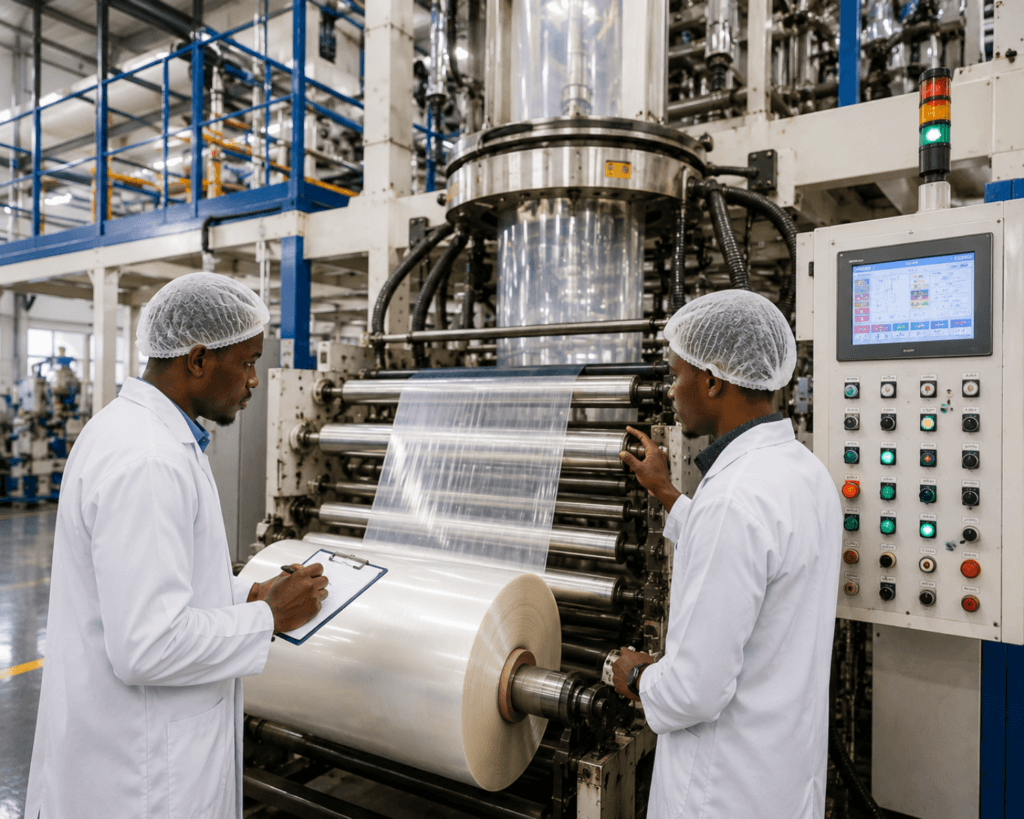
In a co-extrusion line, multiple extruders feed different polymer melts simultaneously into a single multi-channel die. The molten layers are joined inside the die under precisely controlled temperature and pressure conditions, bonding together as a single film as they exit and are cooled. Because the layers are fused during the extrusion process itself — rather than bonded afterwards with adhesives — the resulting structure is cleaner, more consistent and in many applications more suitable for food contact than adhesive lamination.
The number of layers in a co-extruded structure can range from two to seven or more, depending on the performance requirements of the application. Each layer is selected and positioned for a specific function — whether that is oxygen barrier, moisture barrier, structural strength, seal integrity or print receptivity.
Layer Structure and Material Selection
The design of a co-extruded film structure begins with a clear understanding of what the packaging needs to do. We work through the product requirements with you — shelf life targets, filling conditions, storage and distribution environment, retail presentation requirements — and from that brief we specify the most appropriate layer structure and polymer combination for your application.
Common materials used across our co-extruded film structures include polyethylene (PE) in its various grades — LDPE, LLDPE, HDPE and mLLDPE — alongside polypropylene (PP), ethylene vinyl alcohol (EVOH) for high oxygen barrier applications, polyamide (nylon) for puncture and abuse resistance, and adhesive tie layers where required to bond dissimilar polymers. The exact specification depends on the performance targets, the filling method, the sealing equipment on your line and the sustainability requirements of your brief.
What Co-Extrusion Is Used For
Co-extrusion is used wherever a packaging film needs to deliver more than one performance property simultaneously. In food packaging, the most common application is oxygen and moisture barrier — extending the shelf life of products that degrade quickly when exposed to air or humidity. In pharmaceutical packaging, co-extrusion is used to produce films that meet strict contamination and sterility requirements while also delivering the physical properties needed for automated filling and sealing lines.
Specific applications where we supply co-extruded film structures include vacuum bags for meat, poultry, cheese and processed foods; retort pouches for thermally processed ready meals and wet foods; high-barrier stand-up pouches for coffee, nuts, snacks and dry goods with extended shelf life requirements; lidding films for trays and containers; agricultural films; and industrial packaging for products sensitive to moisture or atmospheric contamination.
Co-Extrusion vs Adhesive Lamination
Both co-extrusion and adhesive lamination produce multi-layer film structures, and both have their place in flexible packaging engineering. The right choice depends on the specific performance requirements, cost targets and sustainability considerations of your application.
Co-extrusion produces a solvent-free, adhesive-free structure, which makes it particularly well suited to food contact applications and to brands with sustainability targets around reducing chemical inputs in their packaging. Because there is no adhesive layer, co-extruded films are also generally thinner and lighter for a given performance specification, which can contribute to material reduction goals. Adhesive lamination, on the other hand, allows the combination of a wider range of dissimilar substrates — including printed films, foil, paper and pre-formed structures — and is the preferred method where a packaging structure includes a pre-printed outer layer or a foil barrier.
In many applications, co-extrusion and lamination are used together — a co-extruded multi-layer sealant web is laminated to a pre-printed outer film to produce the finished packaging structure. Our team will specify the most appropriate approach based on your product requirements and production context.
Barrier Performance
Barrier performance is the central technical requirement for most of the co-extruded film structures we produce. The two primary barrier properties are oxygen transmission rate (OTR) — the rate at which oxygen passes through the film — and water vapour transmission rate (WVTR) — the rate at which moisture passes through. Both are measured under controlled conditions and quoted in standard units that allow direct comparison between different film structures.
The inclusion of an EVOH barrier layer in a co-extruded structure can reduce the oxygen transmission rate by several orders of magnitude compared to a standard polyethylene film, making it suitable for products with extended shelf life requirements or products that are genuinely sensitive to even trace levels of oxygen exposure. We specify barrier performance targets at the brief stage and test finished film production against those targets in our in-house laboratory before release to the customer.
Sustainable Co-Extrusion Structures
The move toward recyclable and mono-material packaging has changed how co-extruded film structures are designed. Traditional multi-layer structures combining different polymer families — for example, a polyester outer layer laminated to a polyethylene sealant — are difficult to recycle because the different materials cannot be separated at end of life. Co-extrusion offers a pathway to genuinely recyclable multi-layer structures by combining layers from the same polymer family — typically all-polyethylene or all-polypropylene structures — that retain recyclability while still delivering meaningful barrier and mechanical performance.
We offer mono-material co-extruded film structures for brands working toward recyclable packaging targets, including all-PE structures for flexible film recycling streams. We also supply co-extruded films incorporating post-consumer recycled (PCR) content in appropriate layers, and can advise on the trade-offs between recycled content levels, film performance and processability on your filling and sealing equipment.
Our Co-Extrusion Capability
Our co-extrusion lines are capable of producing films from two to seven layers across a range of widths and thicknesses suited to the majority of flexible packaging applications. We produce film in roll form for further conversion — lamination, printing, slitting and bag-making — and our production capability covers both blown film and cast film processes depending on the structure and application requirements.
All co-extruded film production is subject to our standard quality control process, including in-line thickness monitoring, seal performance testing, barrier verification and dimensional accuracy checks. Production documentation is available for every batch, including material traceability records and test results, and retained samples are held for a defined period after dispatch.
Working With Us
If you are developing a new product and need packaging engineered to a specific shelf life or performance target, or if you are reviewing your current flexible packaging specification and want to explore whether a different structure could improve performance, reduce cost or support your sustainability goals — we are happy to work through that with you.
The conversation typically starts with your product, your shelf life target and your current or intended filling and sealing setup. From there we can recommend a structure, provide a quotation and — where appropriate — arrange a film trial so you can validate the material on your line before committing to a full production run.